Embodied AI and Humanoid Robotics: The Future of Automation
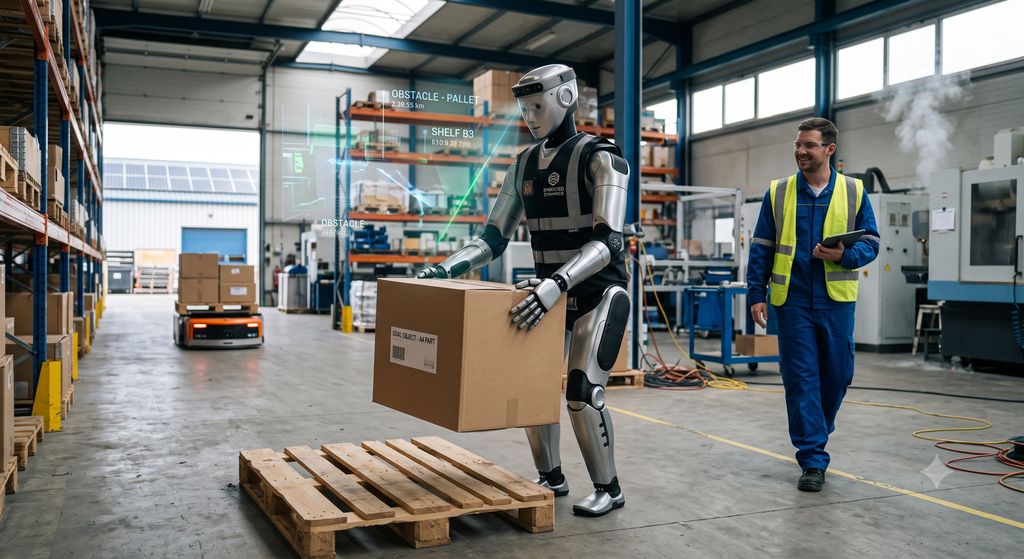
Artificial intelligence is stepping out of the digital realm. Currently, it is entering the physical world rapidly. For decades, AI systems operated exclusively on screens and servers. They functioned primarily as highly advanced calculators. Today, engineers integrate foundational AI models directly into physical hardware. Consequently, they create a groundbreaking paradigm called embodied AI. Specifically, organizations develop advanced humanoid robotics. These machines perceive their environments instantly. Furthermore, they reason through complex tasks autonomously. Ultimately, they interact naturally with the human world.
What is Embodied AI? Bridging Software and the Physical World
Embodied AI refers to intelligent agents interacting with the physical environment. They accomplish this through a robotic body. Unlike traditional AI, this technology learns through real-world physical interaction. Consequently, it utilizes sensory feedback and dynamic spatial data processing constantly.
The Transition from Digital Models to Physical Hardware
Traditional industrial robots are completely blind and highly deterministic. Specifically, they execute precise, repetitive motions written in hardcoded scripts. If an object moves one inch, the traditional robot fails. Even worse, it might cause a severe workplace accident.
Embodied AI fundamentally changes this rigid, dangerous dynamic. Therefore, Vision-Language-Action (VLA) models now serve as the dominant paradigm for robot intelligence. VLA models exploded in popularity between 2025 and 2026. These advanced machines see a scene and understand a verbal command. Consequently, they generate the exact physical motor actions required. If a tool falls, the system processes this spatial data immediately. It then adjusts its path autonomously. In short, it mimics human problem-solving perfectly.
The Rise of General-Purpose Humanoid Robotics
Historically, robotics engineers built specialized machines for specific, narrow tasks. For instance, they designed robotic arms solely for factory welding. However, current trends highlight a massive pivot toward general-purpose humanoid robots. The International Federation of Robotics notes that demand for versatile robots is accelerating rapidly.
The rationale for the humanoid form factor remains highly practical. Importantly, engineers designed our entire civilization for the human body. Stairs, door handles, and hand tools fit human dimensions perfectly. Therefore, building bi-pedal robots with articulated dexterity solves massive integration problems. Companies avoid retrofitting factories, hospitals, and homes completely. The economic case for humanoid robots is incredibly compelling today. For example, projected operating costs could drop to just USD 2 per hour. Furthermore, the OEM-level market could reach USD 750 billion by 2035.
Overcoming Spatial Data and Navigation Challenges
Operating a bipedal robot safely requires continuous spatial data processing. Modern humanoid robots rely heavily on advanced LiDAR and depth cameras. Furthermore, they use tactile sensors to map their surroundings dynamically. By leveraging advanced reinforcement learning, these robots balance and walk autonomously. Consequently, they navigate uneven terrain without any direct human intervention. Thus, they solve one of robotics’ most notoriously difficult engineering challenges.
Enabling Natural Human-Robot Interaction
Beyond movement, foundational AI equips these robots with advanced natural language processing. This integration allows for seamless, natural human-robot communication. Generative AI marks a massive shift from rule-based automation to intelligent systems. For example, an operator can issue a complex, high-level verbal command. The robot then autonomously breaks this prompt down into sequential actions. If needed, the robot asks clarifying questions before executing the task.
Key Industries Transformed by Embodied AI
The commercialization of embodied AI disrupts multiple global sectors significantly. These sectors currently face severe labor shortages and efficiency bottlenecks. Furthermore, working-age populations are projected to decline sharply across key regions. Therefore, robots will eventually fill these massive labor gaps.
Advanced Manufacturing and Supply Chain Logistics
While robotic arms dominated assembly lines previously, humanoid robots bring unprecedented flexibility. A general-purpose robot unloads a truck and carries boxes easily. Because these robots learn through AI simulation, factory managers retrain them rapidly. The logistics sector is already adopting specialized automation aggressively. For instance, Amazon’s fleet crossed 1 million robots in June 2026. These specialized robots assist 75% of global deliveries efficiently. Moreover, Figure AI recently tested its Figure 02 robots at BMW Spartanburg. They successfully loaded parts into vehicles during a grueling 11-month trial.
Healthcare and Assisted Living Environments
Hospitals and eldercare facilities desperately need humanoid robotics today. In healthcare, embodied AI takes over physically demanding tasks entirely. For instance, robots sanitize hospital corridors and transport medical supplies securely. Meanwhile, surgical robotics continue to see mainstream adoption globally. Currently, over 60% of large hospitals worldwide integrate surgical robotics. Furthermore, robots provide cognitive engagement for the elderly. This addresses critical staffing shortages in modern care facilities directly.
Customer Service and Retail Automation
In retail environments, humanoid robots serve as highly capable, multilingual concierges. They combine physical presence with instant access to vast inventory databases. Consequently, they guide customers to specific products accurately. Additionally, retail robots manage inventory through automated, real-time shelf-scanning. For example, Simbe’s Tally robot helps stores achieve a 2% sales increase. Ultimately, they handle complex customer service inquiries while displaying appropriate physical gestures.
The Technological Pillars of Advanced Robotics
The rapid acceleration of embodied AI relies on converging engineering breakthroughs. The robotics industry received $6B+ in funding during early 2026. These massive investments drive both software and physical engineering forward rapidly.
Multi-Modal Foundational AI Models
The “brain” of a modern humanoid relies entirely on multi-modal foundational models. These advanced AI systems ingest video, audio, and text simultaneously. This incredible capability allows the robot to parse visual context accurately. For instance, it recognizes that a specific glass is extremely fragile. At the same time, it processes a spoken command to move it. As a result, the robot calculates a safe, precise grip instantly.
Actuators and Precise Fine Motor Control
On the hardware side, high-torque actuators revolutionize fine motor control. Humanoid robots now execute tasks requiring extreme, human-like dexterity. They can thread a needle or operate delicate hand tools perfectly. However, developing flawless embodied AI remains highly resource-intensive today. Hardware degradation and battery limitations present ongoing, complex engineering hurdles. For example, typical humanoid battery life is currently only 90 minutes. Furthermore, organizations must capture and manage massive amounts of sensor data securely. Finally, the cybersecurity risks of connected robotic fleets demand robust protection measures.
Conclusion: Embracing Intelligent Physical Automation
Despite these hurdles, the integration of software intellect with physical autonomy accelerates. We are steadily moving toward a highly automated era. Soon, intelligent machines will work alongside us daily. By embracing embodied AI, global industries will overcome labor shortages and boost efficiency. Ultimately, the future of global automation depends entirely on humanoid robotics.